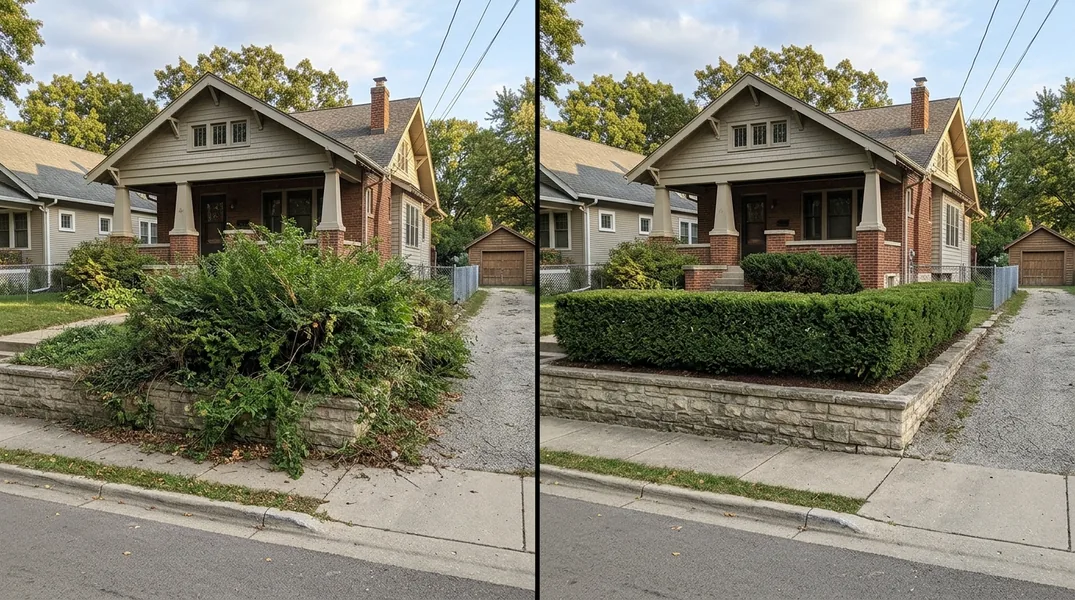
Understanding Derecho and Ice Storm Damage to Trees
If you live in Elgin, you know that severe weather can strike without much warning. Derechos, those powerful straight-line windstorms, and ice storms represent two of the most destructive weather events for trees in our region. Understanding how these storms damage trees is the first step toward protecting your property and knowing when to call for professional help.
Derecho damage occurs when winds exceed 58 miles per hour, snapping branches, uprooting entire trees, and stripping bark from trunks. Ice storms present a different threat: as ice accumulates on branches and limbs, the added weight becomes unbearable. Even trees that seem healthy can fail under the burden of accumulated ice, especially if they've never been properly maintained. The combination of heavy ice and wind creates a perfect storm for catastrophic tree failure, potentially damaging homes, vehicles, and power lines across Elgin.
Pre-Storm Tree Maintenance: Your First Line of Defense
The best defense against storm damage starts long before severe weather arrives. Regular Tree Trimming & Pruning removes weak branches, improves air flow through the canopy, and reduces the surface area that wind and ice can grab. Trees that have been properly maintained are significantly more likely to survive severe weather intact. Dead or diseased branches should be removed immediately, as they represent the weakest points in a tree's structure and are the first to fail during storms.
Professional arborists look for specific structural problems that increase storm vulnerability. Included bark (where bark grows between two branches instead of forming a strong connection) creates weak joints. Codominant stems (two trunks of equal size growing from the same point) lack the structural integrity of a single leader. Trees with these issues should be pruned or cabled before storm season arrives. If you haven't had your trees evaluated for storm readiness, now is the time to schedule a consultation with Elgin Tree Service at (224) 291-8834.
Proper pruning also involves thinning the canopy rather than topping trees. Topping, which involves cutting large branches back to stubs, actually weakens trees and makes them more vulnerable to storm damage. Professional arborists remove smaller branches throughout the canopy, allowing wind to pass through rather than catching and snapping limbs.
Identifying High-Risk Trees on Your Property
Not all trees on your property pose equal risk during severe weather. Some species are naturally weaker wooded and more prone to failure, while others have structural defects that make them particularly vulnerable. Oak trees, while generally strong, can develop large heavy limbs that snap under ice load. Ash trees, which have become less common due to the emerald ash borer, are often weakened and more susceptible to storm damage. Birch and poplar trees, popular ornamental choices, have softer wood that breaks more easily under stress.
Beyond species selection, individual tree health matters tremendously. Trees that are stressed from drought, disease, or poor growing conditions are more likely to fail during storms. Trees growing too close to structures or power lines create additional hazards if they fail. A tree that leans significantly or has large cavities in the trunk represents a serious risk. Elgin Tree Service can help you identify which trees on your property need attention before the next storm arrives. If you're concerned about specific trees, contact us for a free estimate and professional assessment.
When Storm Damage Requires Professional Tree Removal
Sometimes, despite your best prevention efforts, severe weather still causes damage. When this happens, Tree Removal may be necessary. A tree that's split down the middle, has lost more than 50 percent of its crown, or is leaning dangerously toward your home or a neighbor's property should be removed. Trees with extensive bark damage, large cavities, or severe root damage rarely recover and should be professionally removed to prevent future failure.
The challenge comes when you need to determine whether a damaged tree can be saved through pruning or whether removal is the only safe option. This is where professional judgment becomes invaluable. A tree that's partially damaged might recover with proper pruning and care, while another might be a liability waiting to happen. After a major storm, Elgin Tree Service provides Emergency Tree Service to assess damage and remove hazardous trees quickly. We understand that storm damage creates urgent situations, and we're equipped to respond promptly to protect your family and property.
Emergency Tree Service in Elgin: What to Expect
When a derecho or ice storm strikes, your first instinct might be to grab a chainsaw and start clearing debris. We strongly advise against this. Removing storm-damaged trees is dangerous work that requires professional equipment, training, and insurance. Branches under tension can snap unexpectedly, trees can fall in unpredictable directions, and power lines create electrocution hazards. Professional Emergency Tree Service teams have the expertise and equipment to handle these dangerous situations safely.
When you call Elgin Tree Service at (224) 291-8834 after a storm, we'll dispatch a crew to assess the damage and create a removal plan. We have the equipment to safely remove large trees, cut up debris, and haul everything away. We'll also help you understand which trees can be preserved and which need removal. After removal, if you want to replant, we can offer recommendations for storm-resistant species that will thrive in your yard.
Many homeowners also discover that after tree removal, they're left with unsightly stumps. Stump Grinding eliminates these eyesores and allows you to reclaim yard space for new plantings or landscaping projects.
Storm-Resistant Tree Species for Your Elgin Landscape
If storm damage forces you to remove trees from your property, replanting with storm-resistant species makes sense. Not all trees are created equal when it comes to severe weather resilience. Native species like red oak, sugar maple, and hickory have evolved to withstand the climate and weather patterns of our region. These trees typically have stronger wood, better branch structure, and deeper root systems than ornamental imports.
When selecting replacement trees, consider mature size and shape. Trees with a single clear leader and well-spaced lateral branches are naturally stronger than those with multiple competing trunks or narrow crotch angles. Avoid species known for weak wood or poor branch structure. Your local Elgin Tree Service team can recommend species that will not only survive future storms but also enhance your landscape for decades to come. Ask about storm-resistant options when you contact us for your free estimate.
Looking for a professional tree service contractor in Elgin? Elgin Tree Service responds fast for all your tree service needs.
Get a Free QuoteOur services: Tree Removal · Tree Trimming & Pruning · Stump Grinding